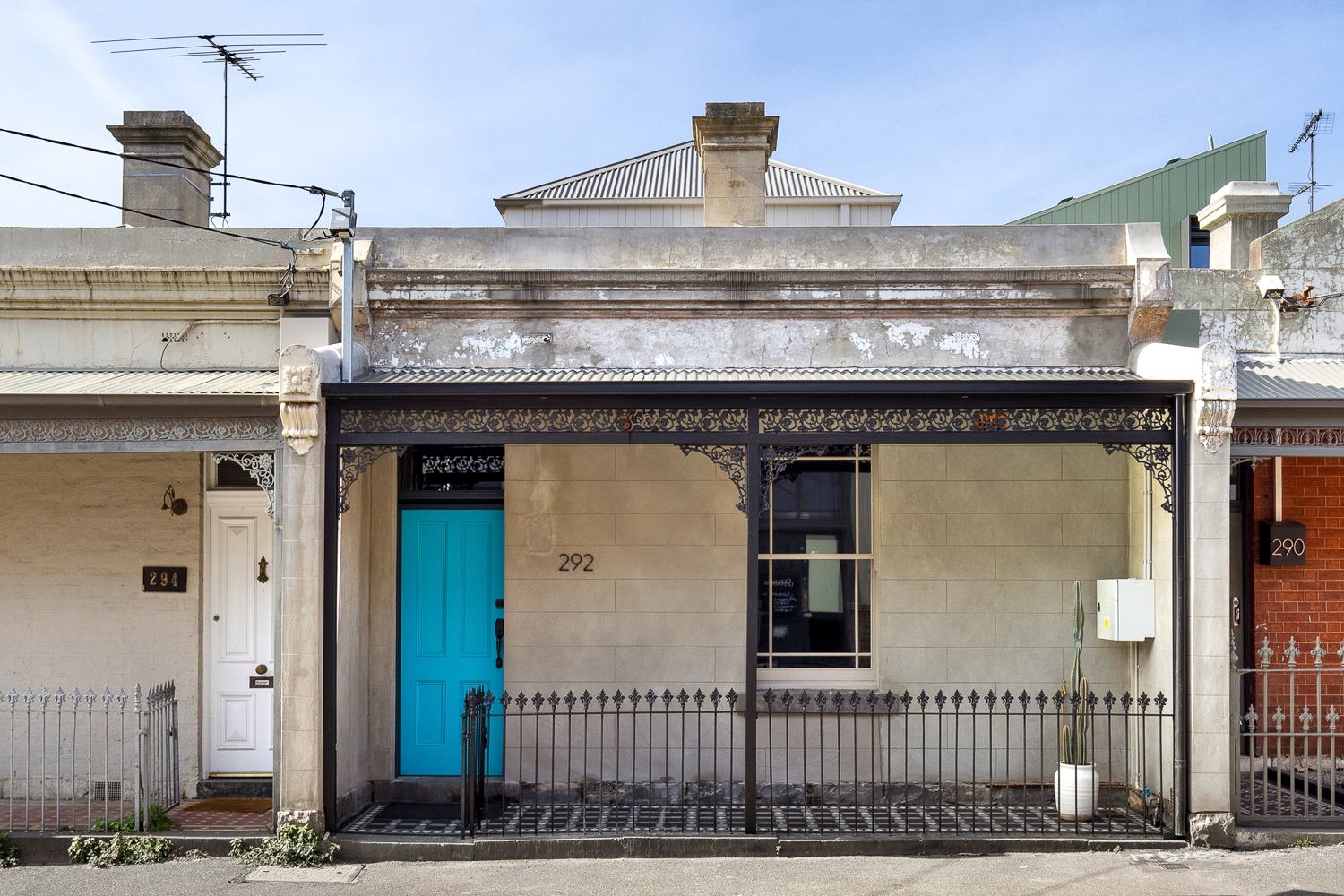
In 1874, when 290 and 292 Fitzroy Street were first recorded in the Sands and McDougall directories, the neighbourhood was dense with tradesmen, merchants, and immigrants building a new life in the young colony of Victoria. One of the first families to occupy these terraces was the Horans. James Horan was an Irish carpenter who arrived in Melbourne in the late 1850s, settled on Fitzroy Street opposite the Standard Hotel, and purchased 292 outright in 1879. It would remain in his family name for decades to come.
His sons became the family’s most noted legacy. Thomas “Tom” Horan played in the second ever Test cricket match in 1877, going on to write about the game under the pen name “Felix” for The Australasian. His brother James was a noted footballer. A modest terrace on Fitzroy Street was quietly part of the earliest years of Australian sport.
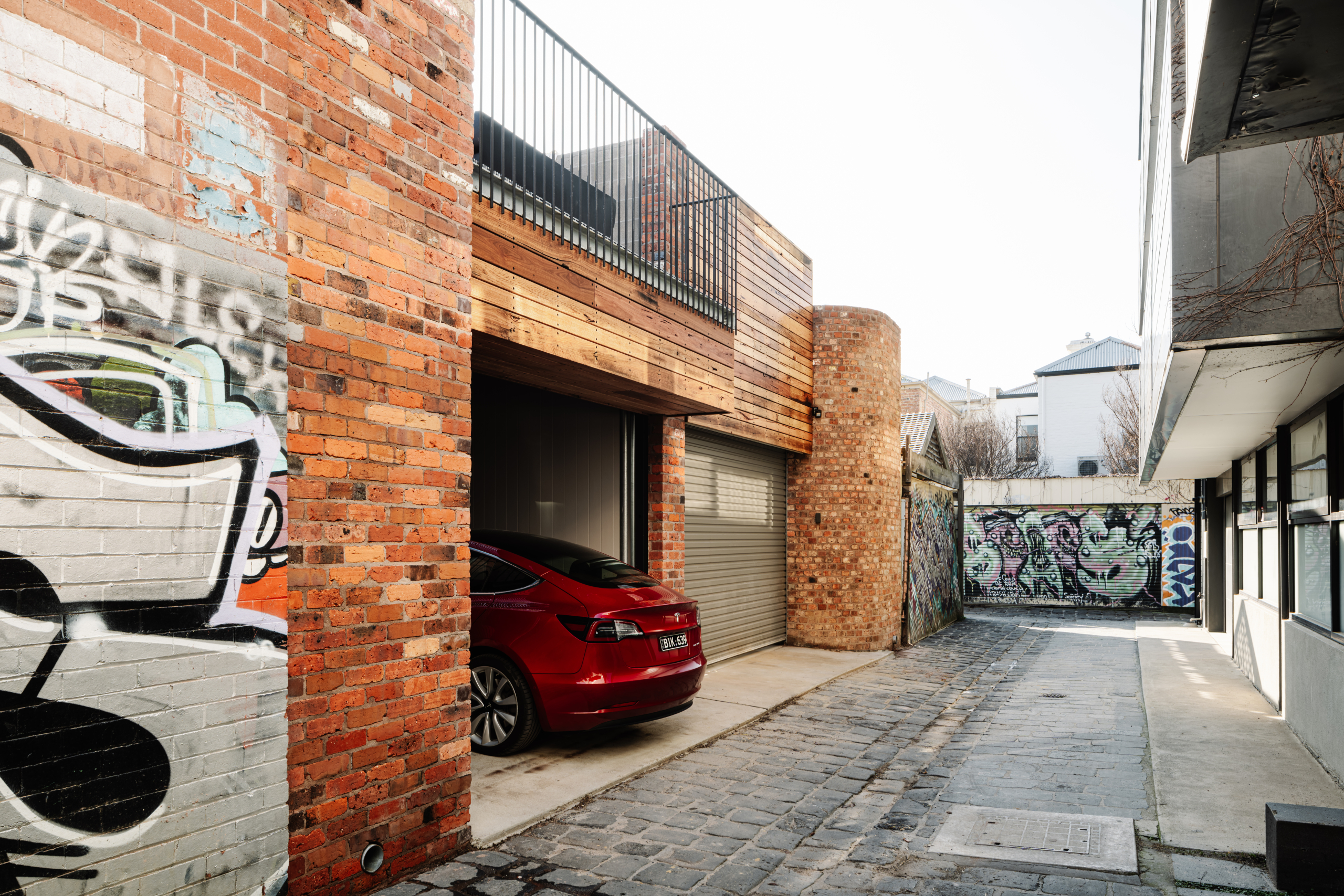
The laneway behind both properties tells its own story. Known earlier as Anderson Lane, it served grocers, a box factory and a fruit merchant. A well, long since covered, once tapped a waterway running beneath the rear of both homes. This part of Fitzroy was built over a living landscape. By the time these two terraces came to their new owners in the early 2020s, one had not been lived in for over thirty five years.
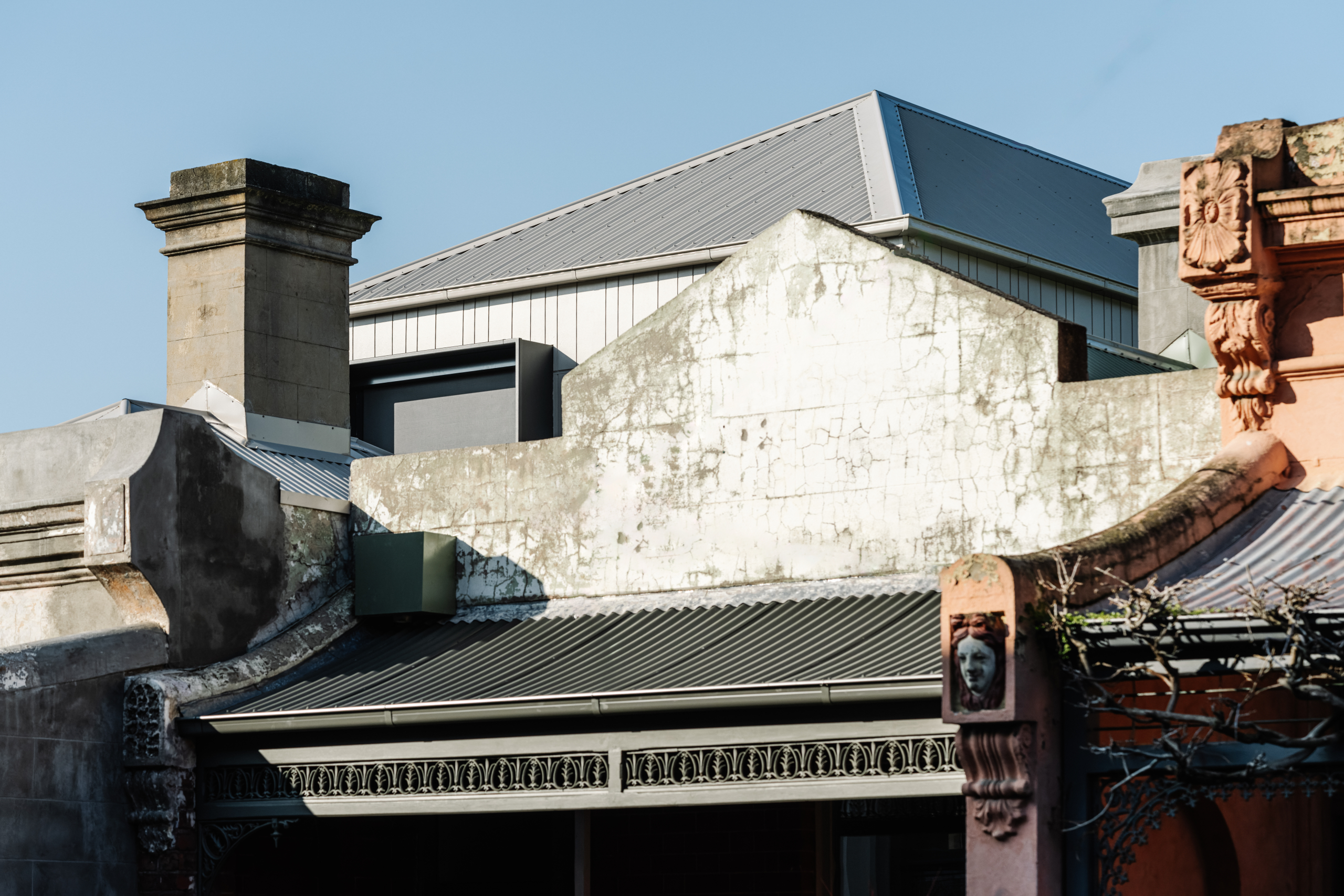
The brief was simple: restore the heritage truthfully, and make both homes as sustainable and energy-efficient as possible. Under the City of Yarra’s heritage overlay, the character of the streetscape must be protected. What passes on Fitzroy Street today is essentially what was built in 1874. Rendered double-brick facades, cast iron lacework and fencing restored to their original condition, chimneys rising above the parapets, tessellated tiles to the front porches, and the original front windows returned to operable condition plus double glazing. The contribution these homes make to the streetscape is unchanged, and rightly so.
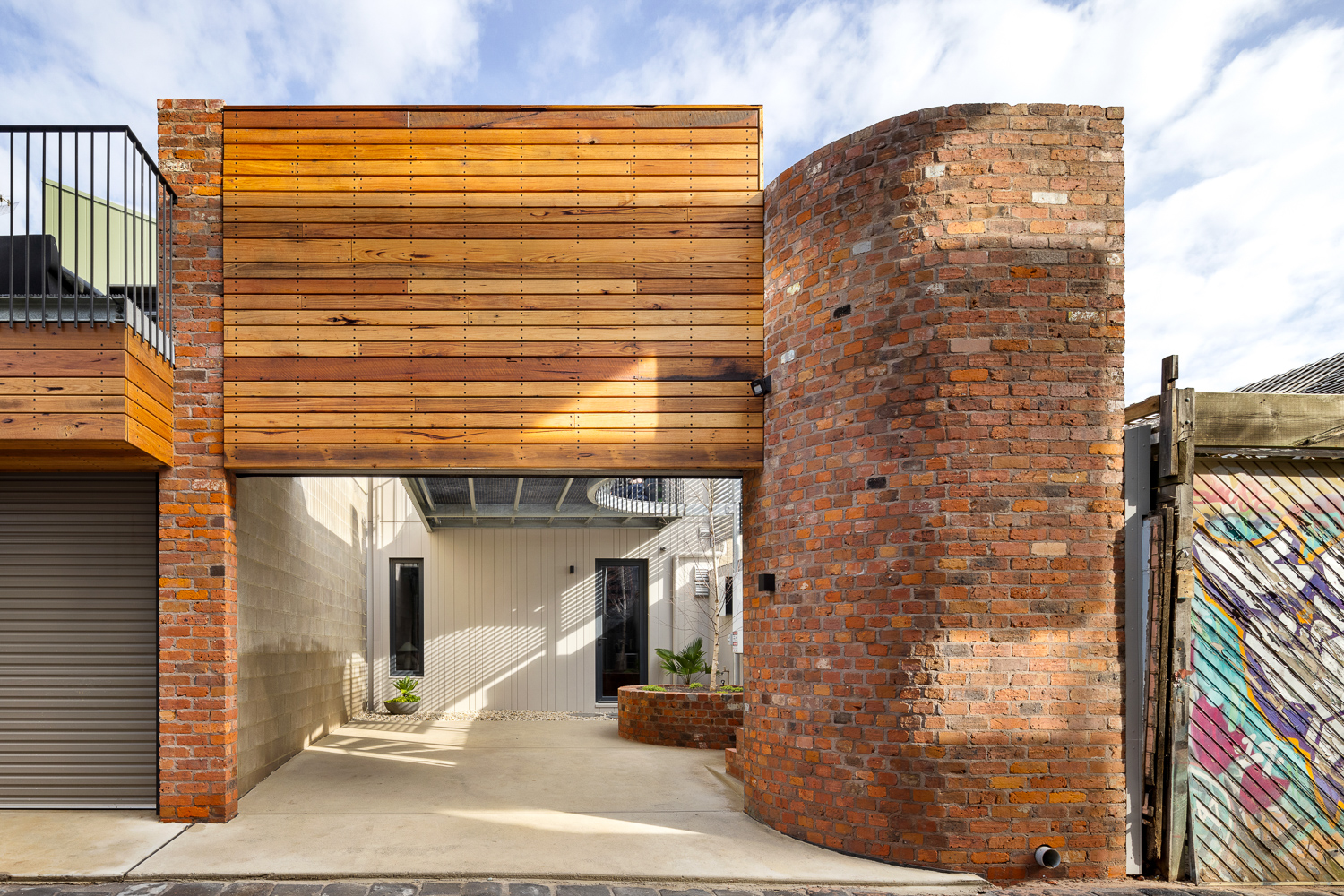
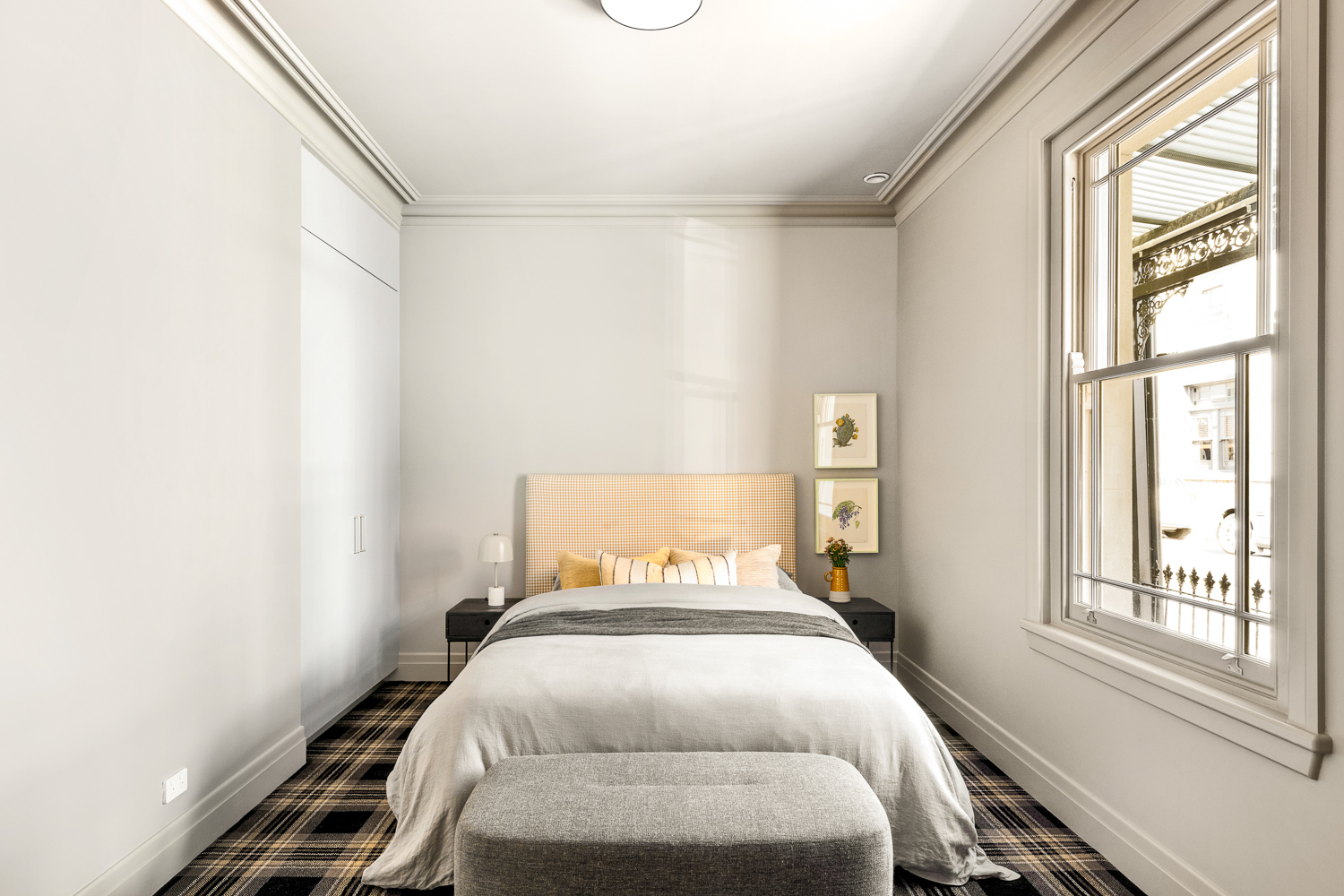
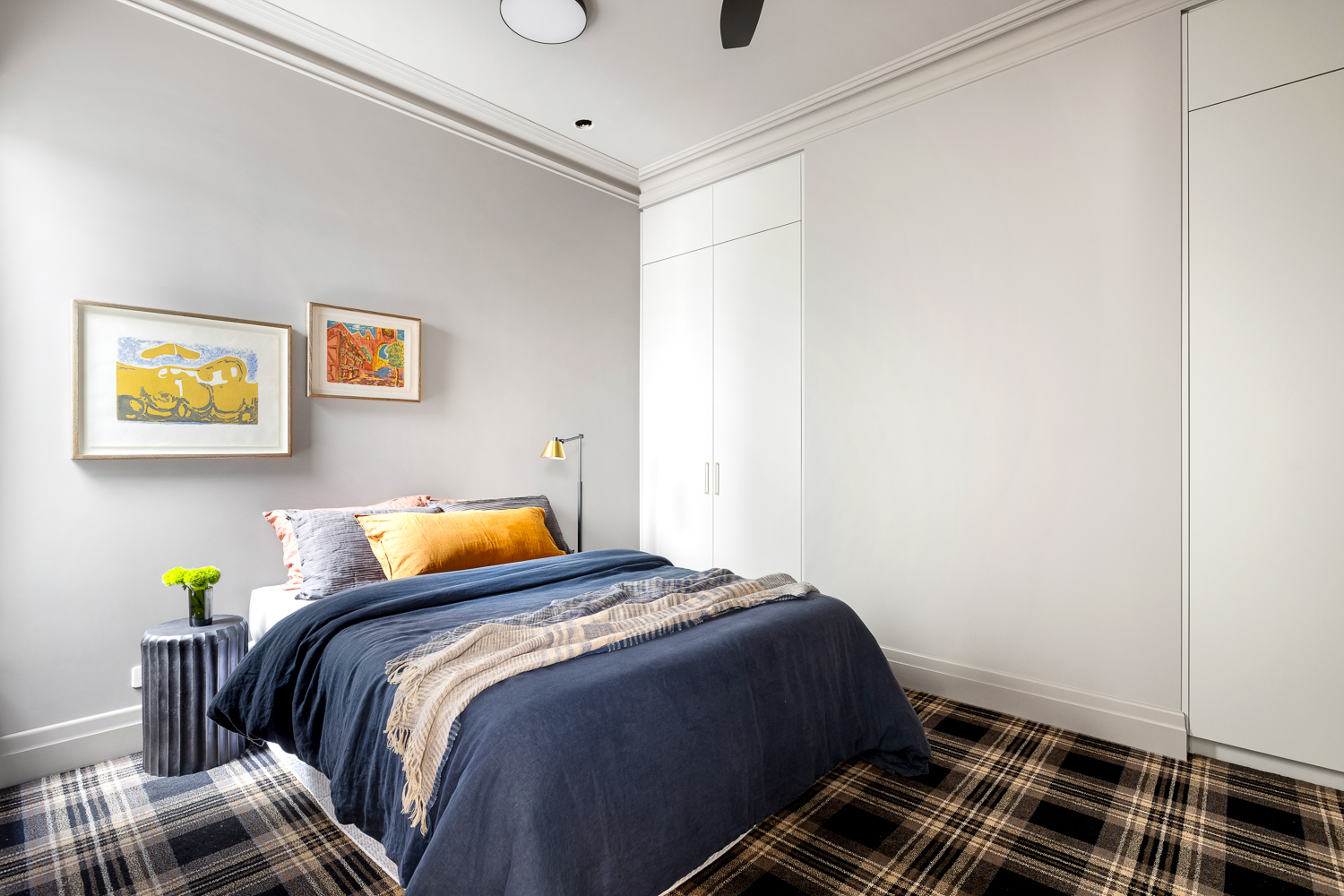
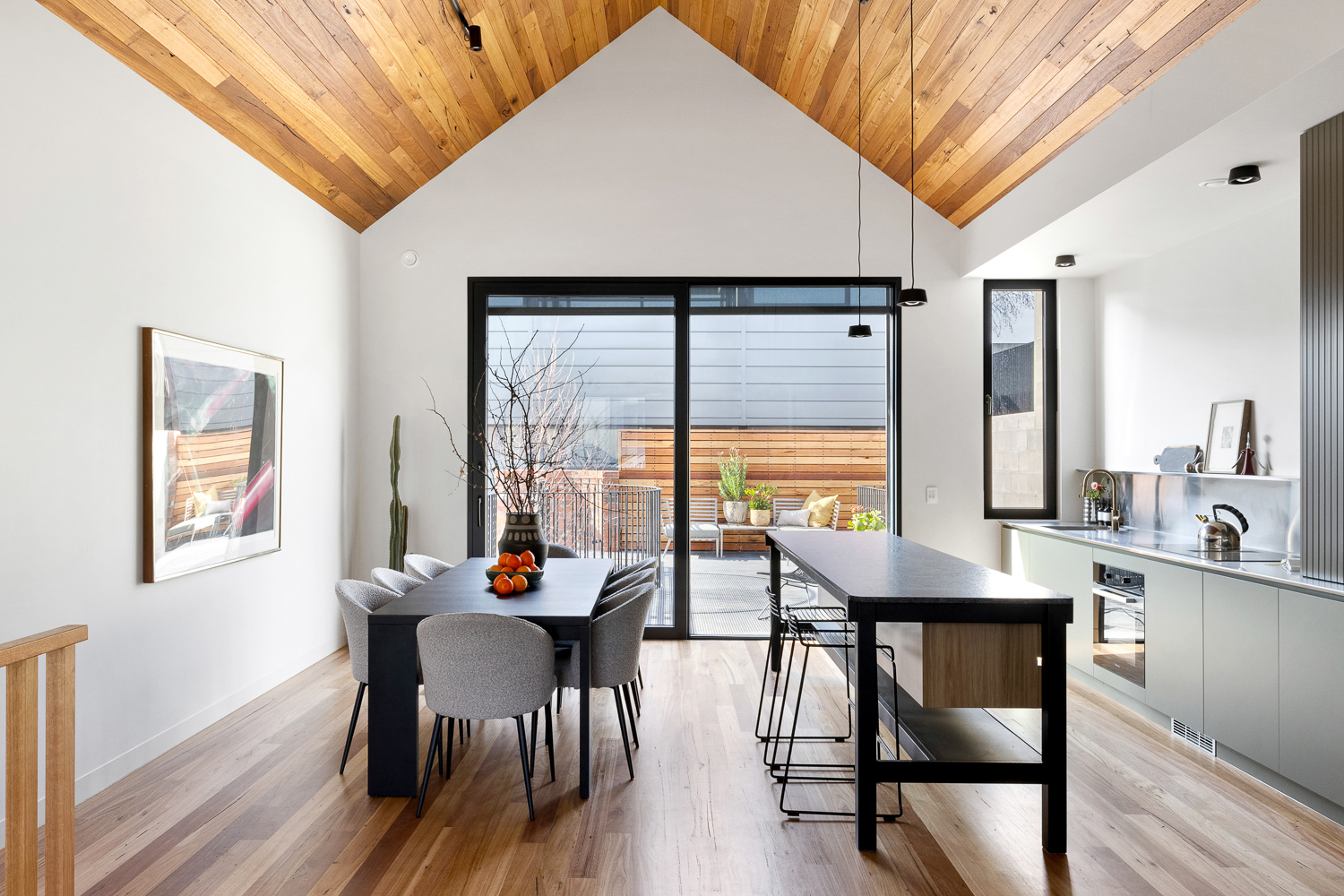
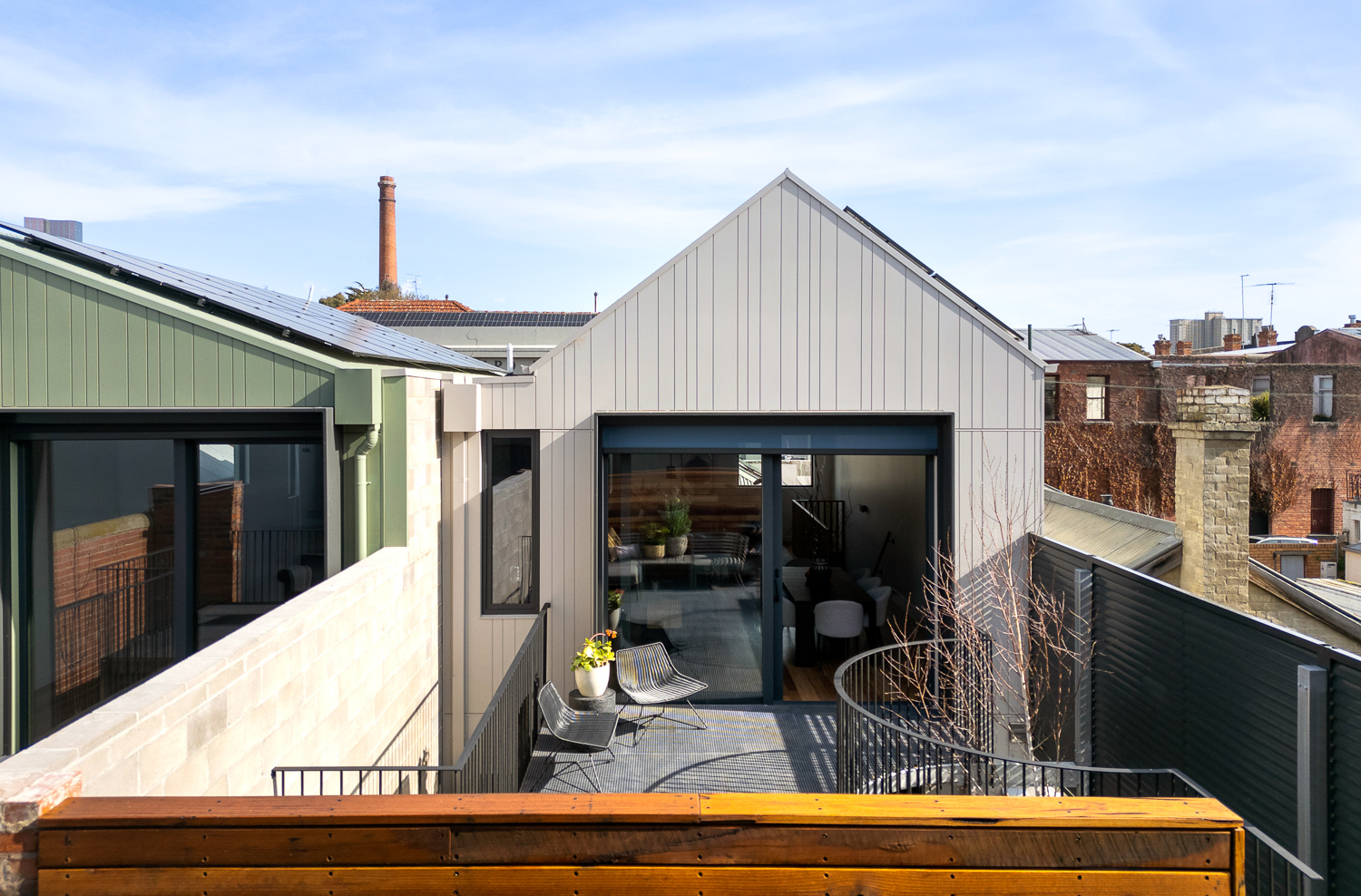
The heritage work extended deep into the structure. Original double brick walls were retained in full. Bluestone footings left undisturbed. The original front two rooms of each home were kept intact, with a double-storey extension to the rear, clearly contemporary in character and making no attempt to try and look old. We think it’s better for it.
Victorian terraces were built for a different understanding of climate. Thermal efficiency and comfort were not a thing in 1874. Both of these homes, as they were, rated around 1.5 stars on the NatHERS ten star scale. After renovating, the south home now rates 7.1 stars and the north home, 7.9. Both now exceed what is required of new homes built in Australia today.
Both homes are fully electric, meaning no gas. Rooftop solar and a battery in each means both homes generate more energy than they consume. Annual energy costs were $4,800 and $6,200 per home before the renovation, now sit at $281 and $533 respectively. Both are operationally carbon negative, together removing the equivalent CO2 of five cars from the road every year. The decision to retain and work with the original 1870s masonry, rather than demolish and rebuild, also saved an estimated 100 tonnes of embodied CO2.
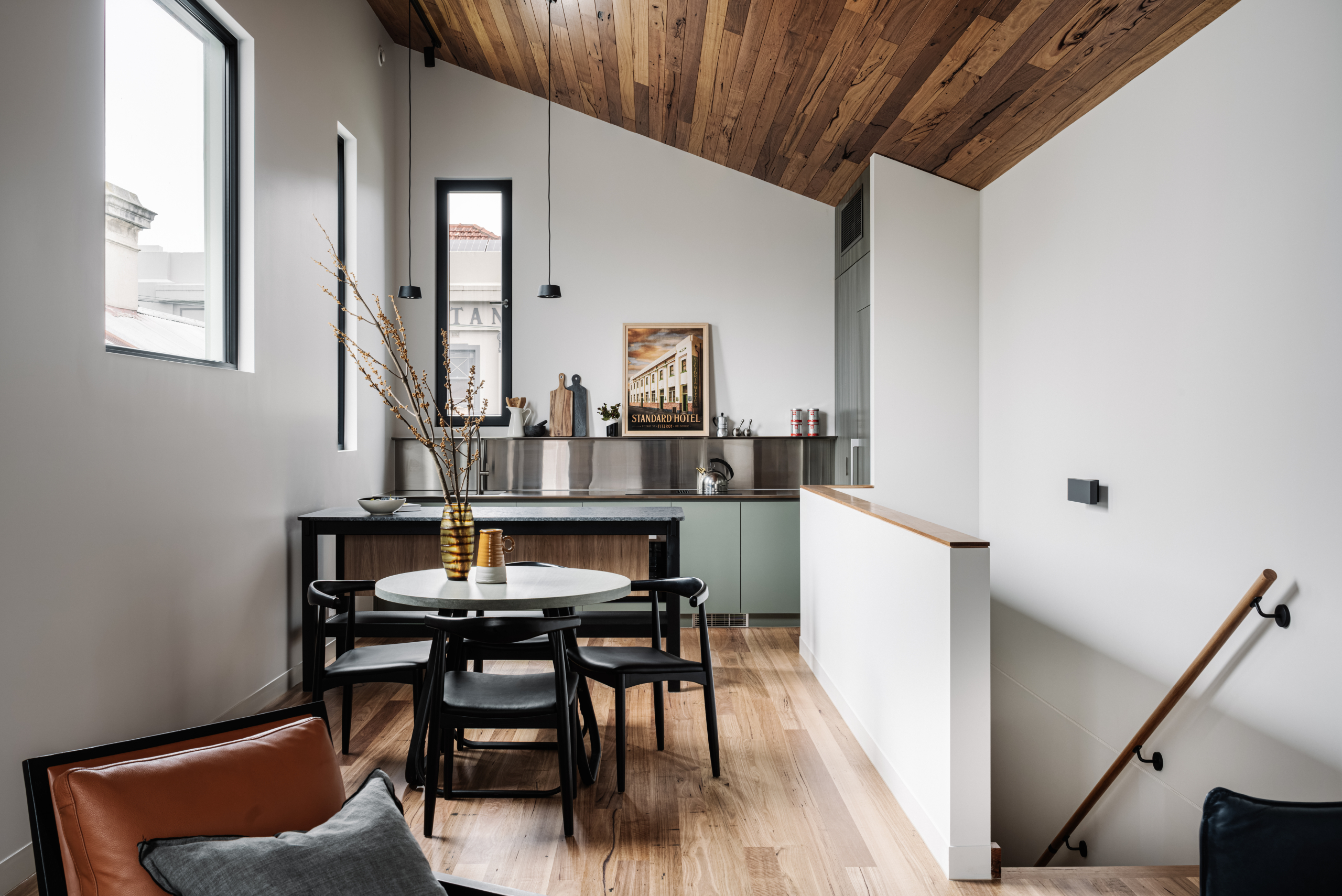
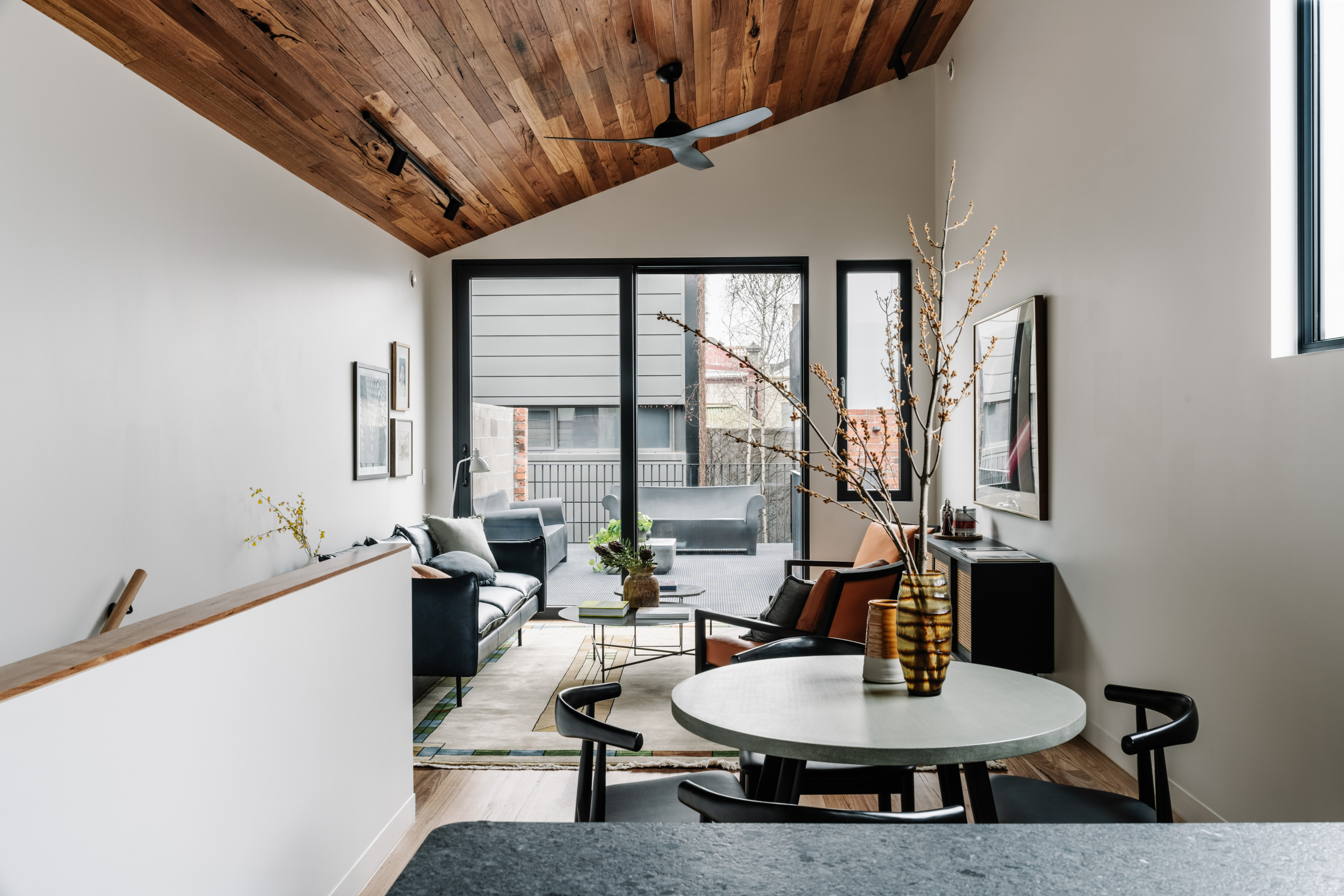
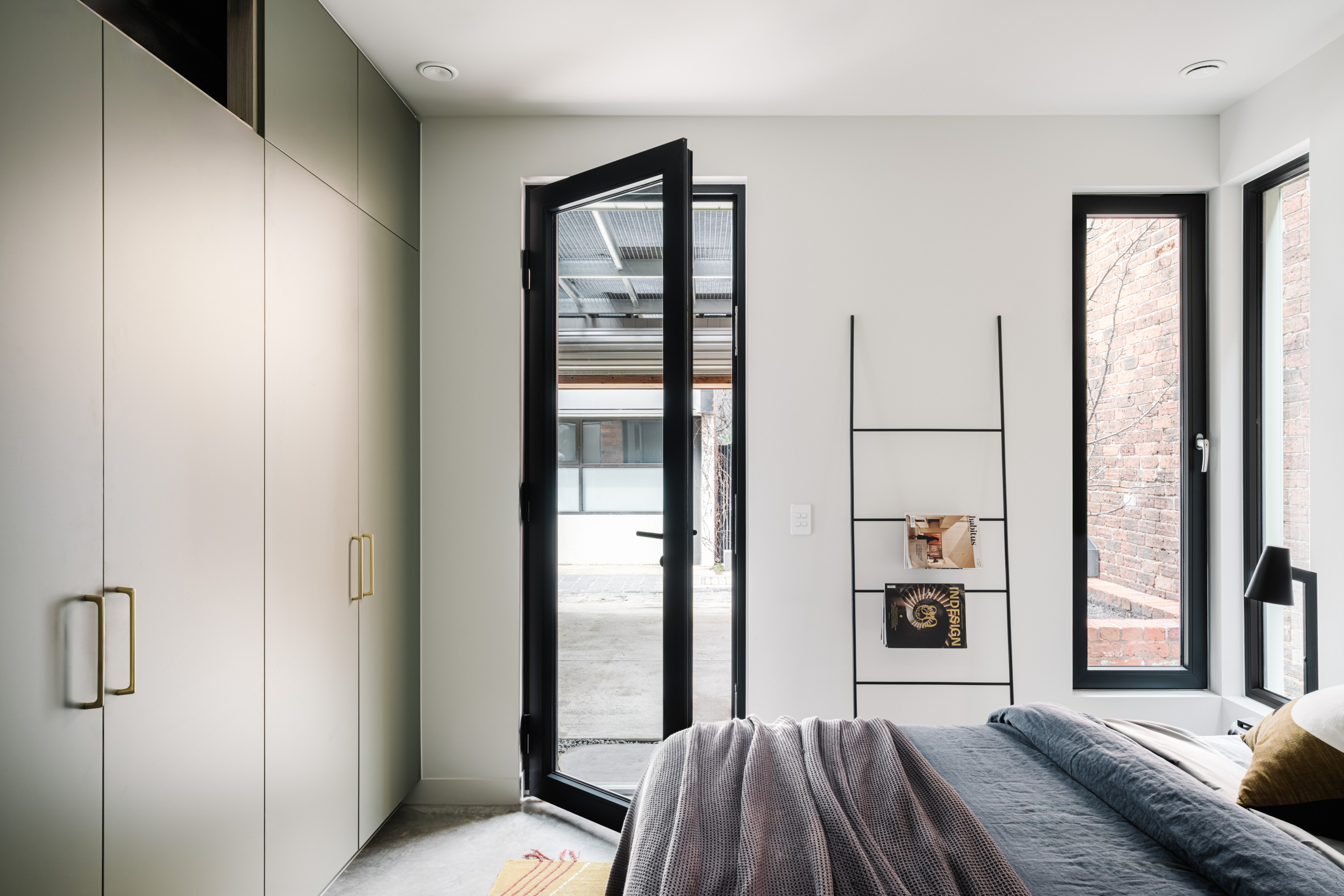
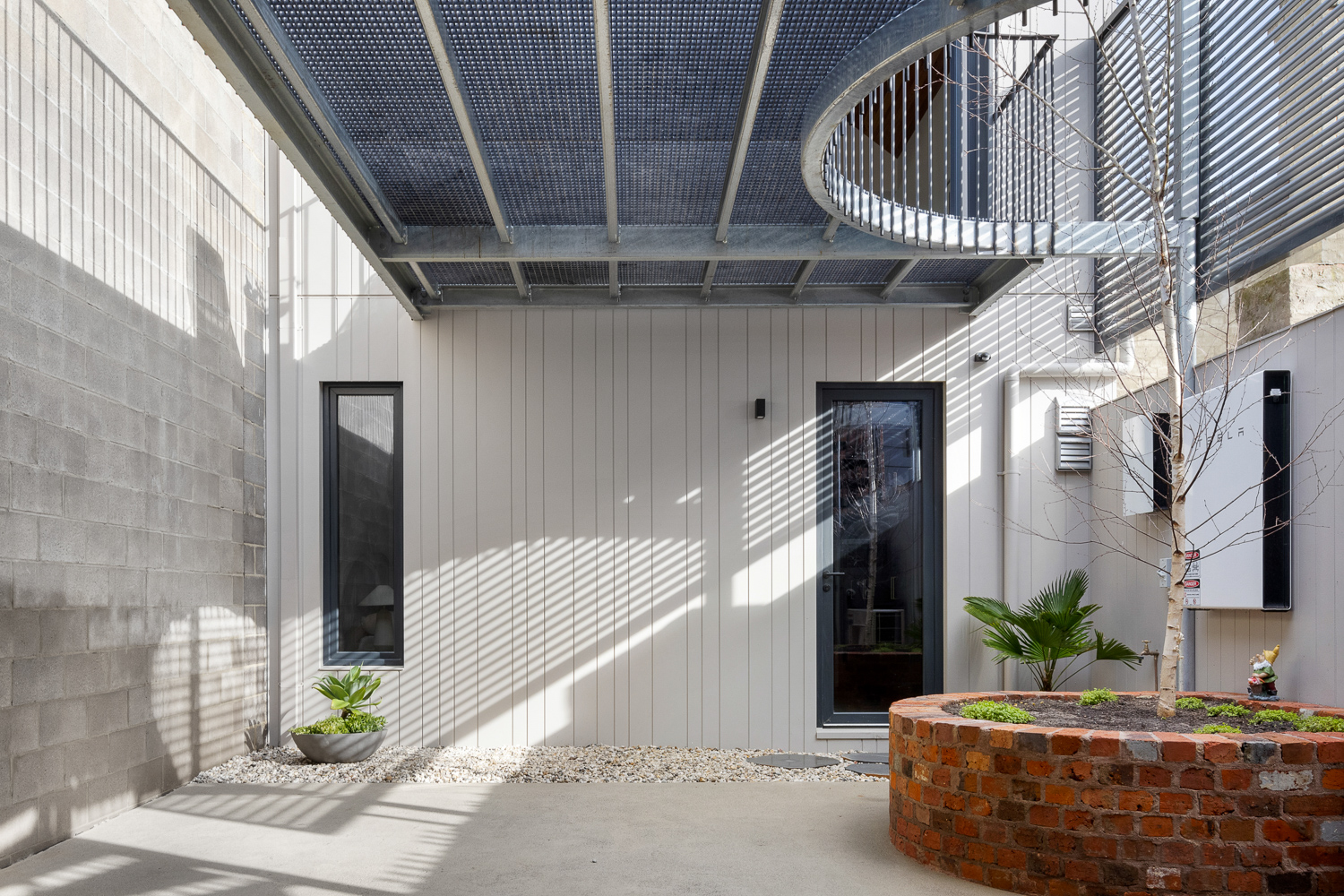
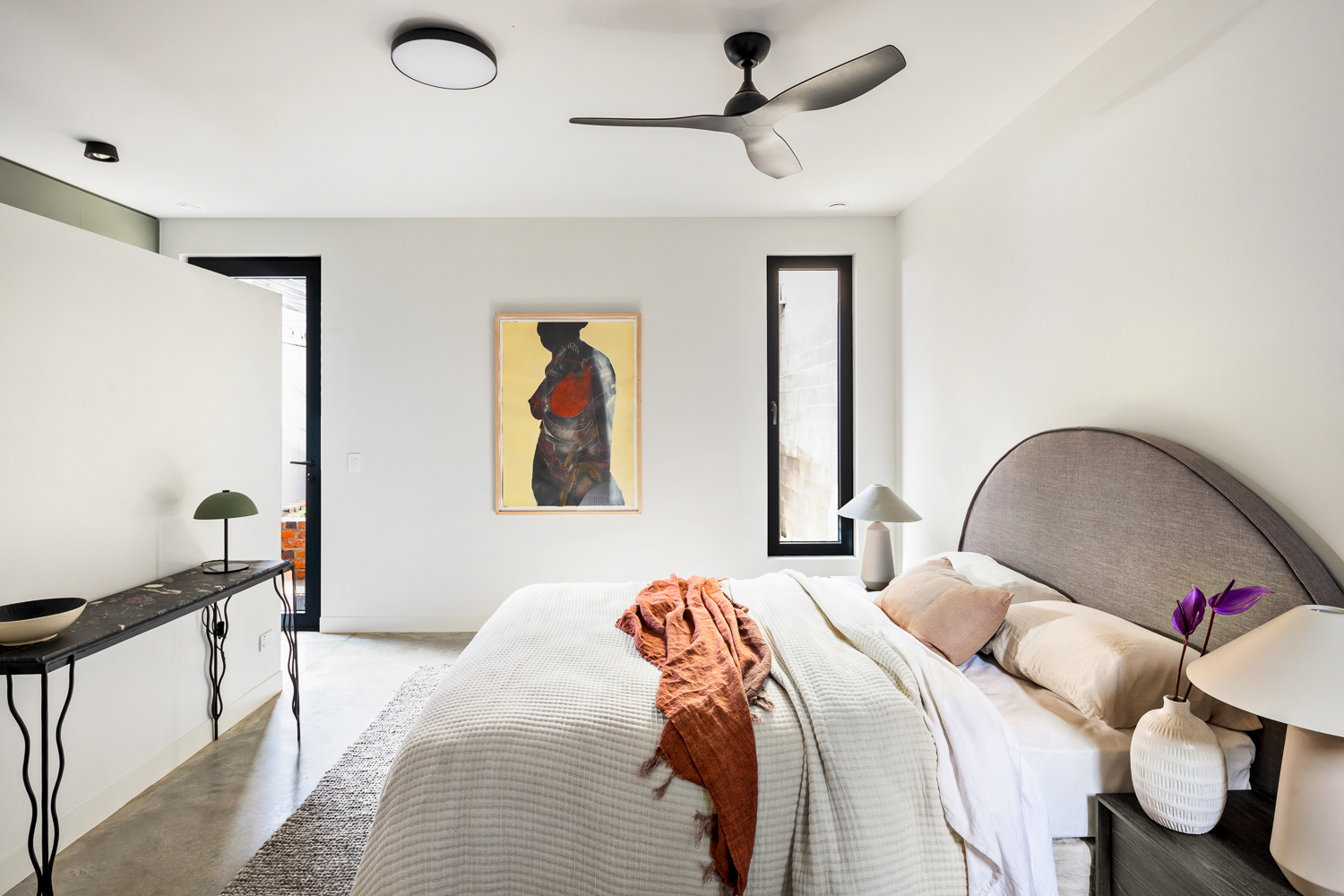
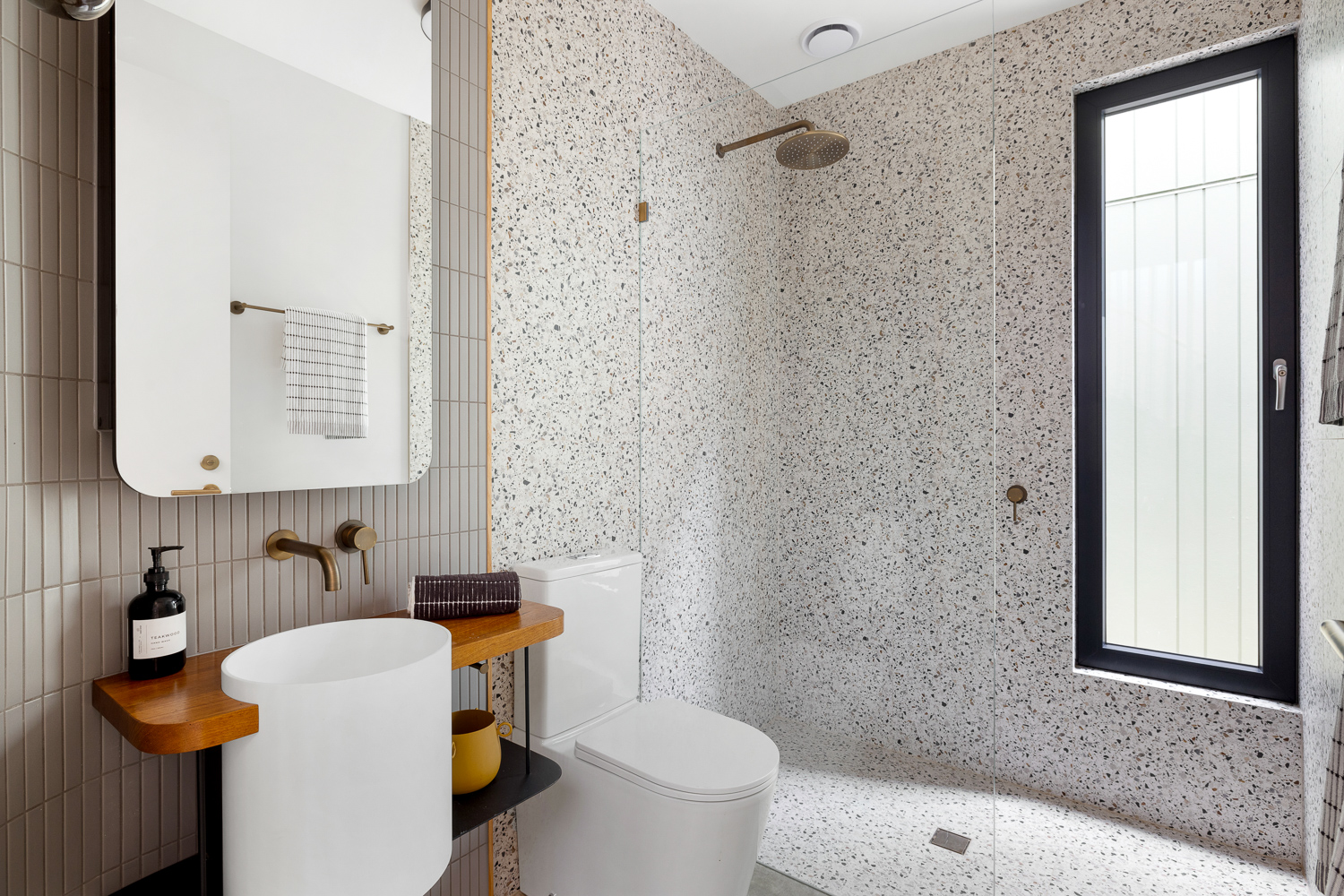
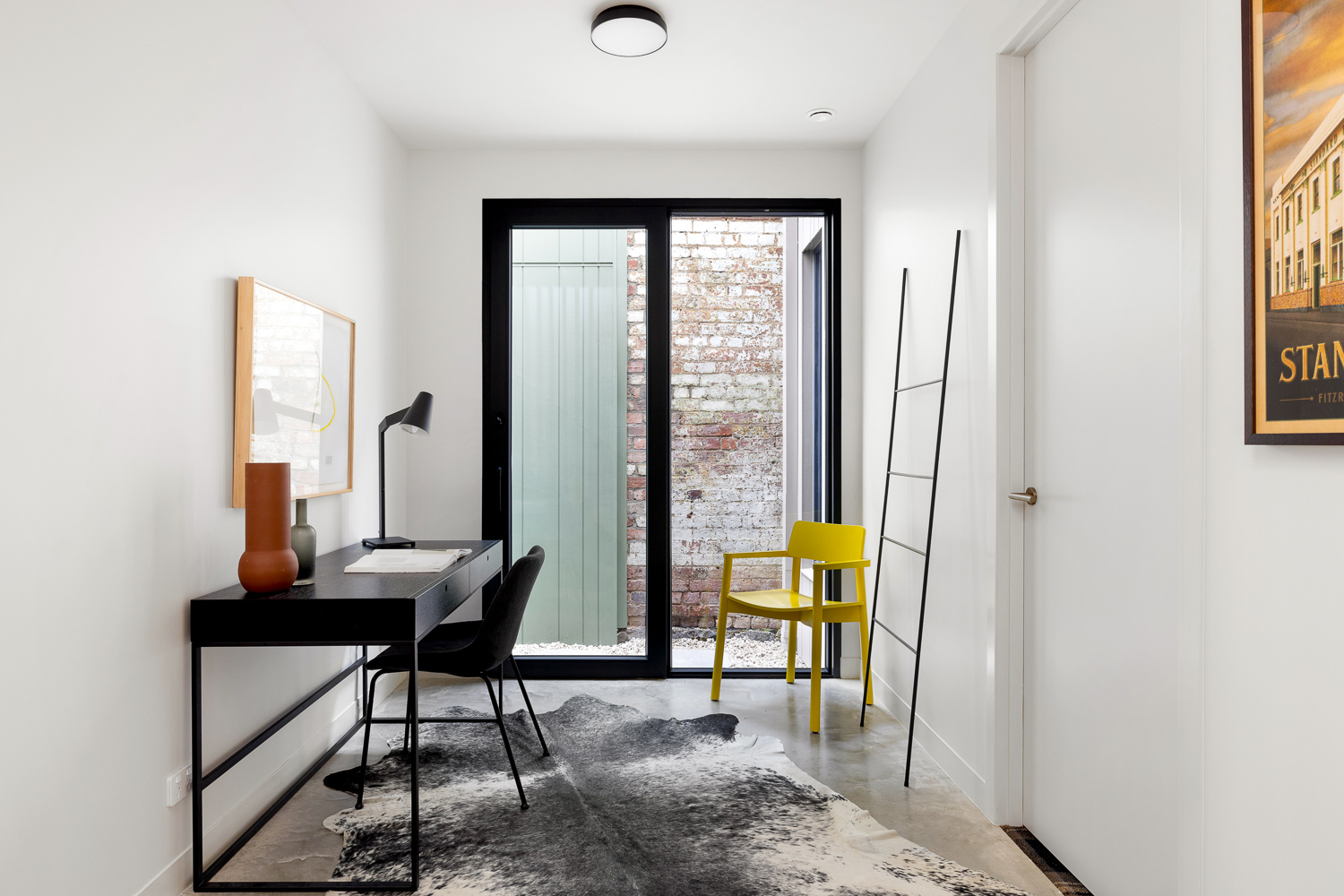
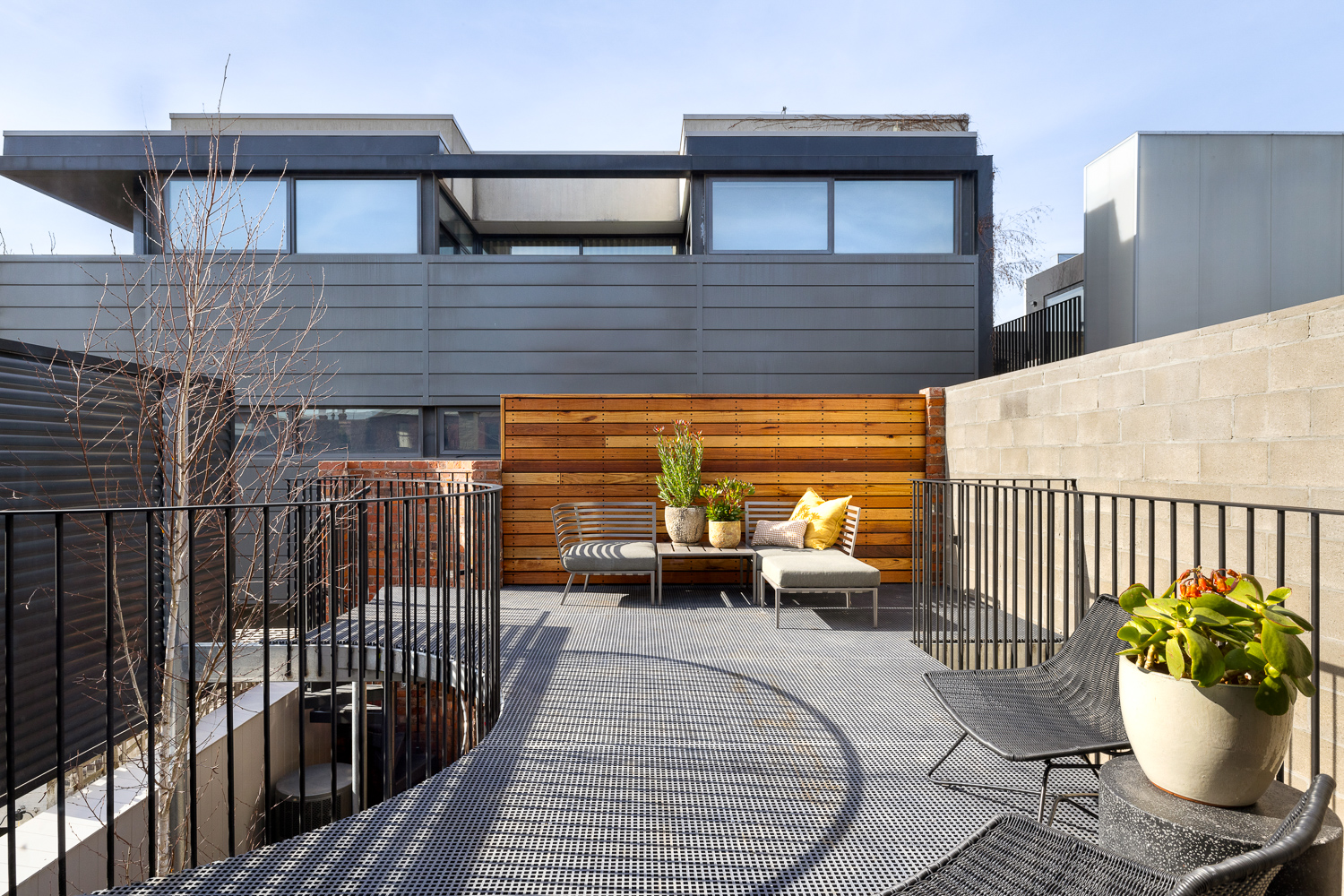
290 and 292 Fitzroy Street are not architecturally remarkable buildings. They are two modest Victorian terraces in a suburb full of them. Their significance lies elsewhere. They demonstrate that a heritage overlay does not have to be the obstacle to energy performance that it is commonly assumed to be. What the street sees does not need to change for what happens inside to be completely transformed. The building fabric, the brickwork, the bluestone footings, the cast iron, the chimneys, can be faithfully honoured. The homes behind the fabric can be made to perform at a standard their original builders would never have imagined.
If the original owner James Horan were to return to the house on Fitzroy Street, the front door and the iron lacework above it would look exactly as he left them. But step inside, and the world he knew is gone. The thick brick walls that once let cold creep through now hold warmth like a thermos. The rooms are now silent where drafts once whistled. The air is clean and fresh without a fire lit anywhere. What once cost $5,000 a year to heat and cool now costs $281, and the house gives back more energy to the grid than it takes.
These homes have stood since 1874. They deserve a new life fit for the next hundred and fifty years. These two are now ready.
Renovation by Sustainable Homes Melbourne. 290-292 Fitzroy Street, Fitzroy, built circa 1874, restored 2024.
Journey with us on instagram
Our latest property listings, stay offers, and feature articles delivered straight to your inbox.